Off-Leash Dog Parks in Charlotte and How to Train for Them
General training information. For aggression, sudden behavior changes or health concerns, see your veterinarian first.
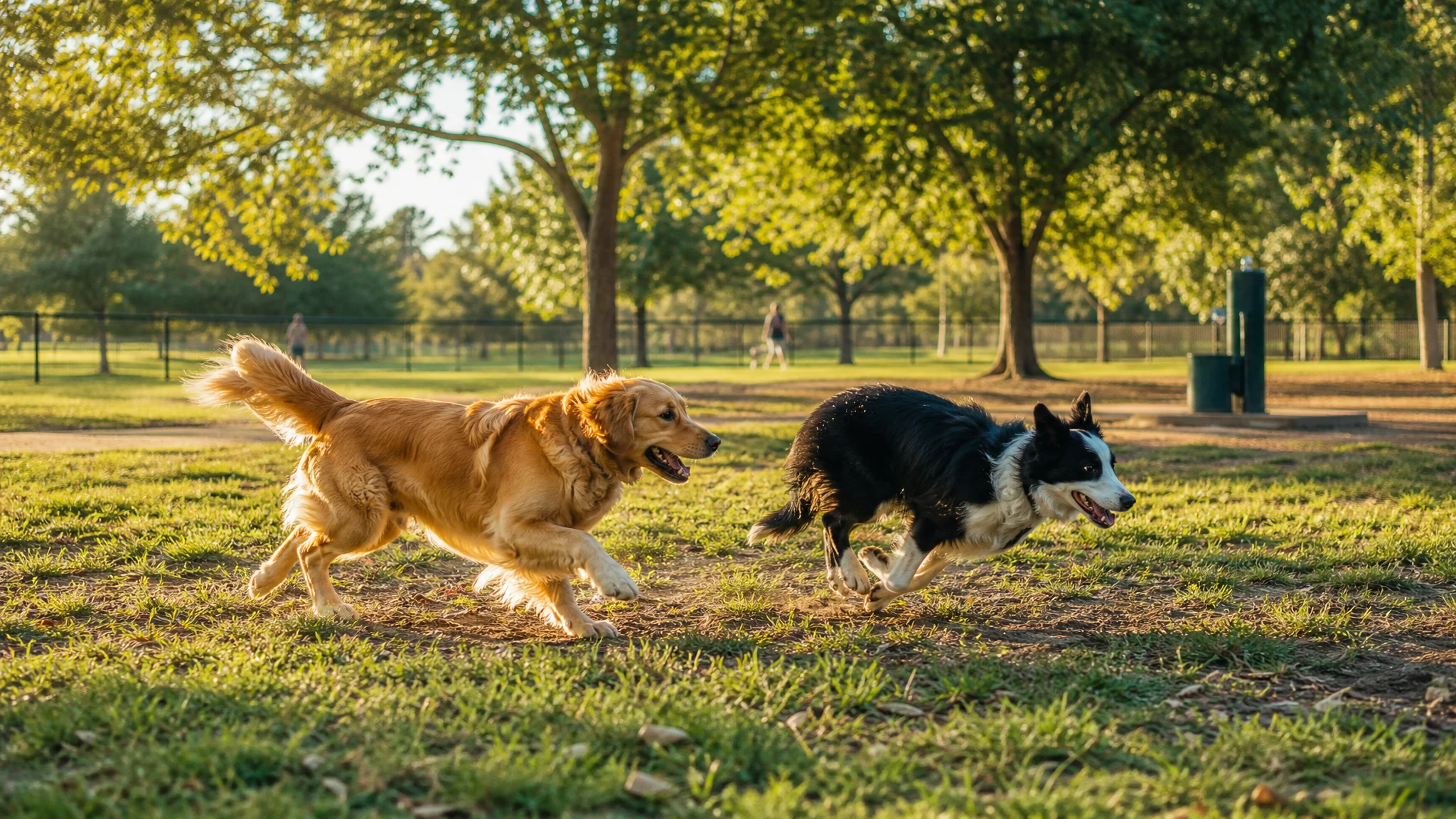
Dog parks in Charlotte can be a great outlet for a social, confident dog. They can also be a rough day for a dog who isn't ready. The difference is usually preparation, not luck.
This guide covers the off-leash dog parks run by Mecklenburg County, the rules you need to meet at the gate, and a step-by-step plan for the skills your dog needs first. It also covers when a dog park is simply the wrong choice for your dog.
Off-Leash Dog Parks in Charlotte: What the County Says
Mecklenburg County Park and Recreation lists these dog parks. The county's dog park page sets the rules that apply across them:
- Parks are open daily from 7:30 a.m. to sunset.
- Dogs must have current vaccinations to use the off-leash areas: rabies (with the tag number), DHLPP and Bordetella.
- No children under the age of 12 are allowed in dog parks.
The county page I relied on did not publish a fee. If you want to confirm costs, hours or closures before you go, check with Mecklenburg County Park and Recreation.
Davie Dog Park at William R. Davie District Park
Davie Dog Park is at 4635 Pineville-Matthews Road in south Charlotte. The county blog describes it as a 5-acre off-leash dog park. A larger space gives dogs room to spread out, which helps a nervous dog keep distance from others.
Frazier Park Dog Park
Frazier Park Dog Park sits near center city along the Irwin/Stewart Creek Greenway. The county describes separate areas for small and large dogs and a public water supply. The county blog says it is on 1.3 acres, so it is more compact than Davie. Dogs must be leashed on the greenway itself, so keep your leash on until you reach the gate.
Shuffletown Dog Park and Clarks Creek Dog Park
Both parks have their own pages on the county's Park and Recreation site. The pages I opened did not give a street address or park-specific rules for either one. The county-wide rules above apply. Before you drive over, check the county's park pages or call the Park and Recreation office to confirm the location and any updates.
Looking for an off-leash dog park near Charlotte's edges?
Towns around the city, such as Davidson, may have their own rules, and the county rules above cover its own parks. If you are looking at an off-leash dog park near Charlotte but outside Mecklenburg County, check with that town or county for its requirements.
Charlotte Rules That Apply Before You Reach the Gate
A few local rules matter even before you think about training.
- Leash law. The City of Charlotte Animal Care and Control page on the Mecklenburg County Animal Ordinance says dogs must be on a leash and under physical restraint at all times when off the owner's property, unless contained by a fence or a marked, operable invisible fence. It lists a $50 citation for a first violation. That is why the walk from your car to the gate is on leash.
- Rabies vaccine. North Carolina General Assembly G.S. 130A-185 requires owners of dogs over four months old to have them vaccinated against rabies.
- License. City of Charlotte Animal Care and Control says dogs aged 4 months and older need a license in Charlotte, with proof of a current rabies vaccine. Fees on its Pet License page are $30 for a fertile dog, or $10 for one year or $25 for three years for a sterilized dog.
- Barking. The county animal ordinance lists excessive, continuous or untimely barking as a public nuisance. Practicing quiet behavior at home helps.
- Bites. The same ordinance page says dogs that bite someone are quarantined for ten days, and owners of dogs determined to be dangerous face measures such as secure fencing, insurance, warning signs and muzzling off the owner's property.
Those last points are a good reason to take dog park readiness seriously. Your dog's behavior is your responsibility the moment the gate closes.
What You Need
- A flat buckle collar or a well-fitted harness, plus a standard 6-foot leash.
- A 15 to 30 foot long line for recall practice in open areas.
- Small, soft, high-value treats your dog loves, in a treat pouch.
- A favorite toy, if your dog likes tug or fetch.
- A collapsible water bowl and water.
- Your dog's vaccination records, with the rabies tag number handy.
- A few weeks of short practice sessions, five to ten minutes each.
Skip shock, prong and choke collars. The American Veterinary Society of Animal Behavior (AVSAB) recommends reward-based training, and these tools can create fear and make behavior problems worse.
Step-by-Step: Training Your Dog for the Dog Park
Step 1: Confirm your dog meets the entry rules
Your veterinarian can confirm that rabies, DHLPP and Bordetella are current. Puppies need their full series before they go. For reference, the Humane Society of Charlotte requires proof of DHPP, rabies and bordetella vaccines for all dog classes, and puppies can join at 16 weeks. Other facilities may differ, so ask your veterinarian about the right timing for your puppy.
Also make sure your dog is licensed, as covered above. That is easy to forget and simple to fix.
Step 2: Build a reliable recall
Recall is the most important skill for an off-leash area. Start indoors.
- Pick one cue word, such as "Here." Use it only for coming to you.
- Say it in a happy voice from three feet away. When your dog arrives, give a treat right away.
- Add distance a few feet at a time, then add mild distractions like a toy on the floor.
- Move to the backyard on a long line. Let the line drag if your dog does well, but never use it to yank your dog back.
- Practice in new places with more distractions, such as a quiet greenway or a park edge, always on the long line.
Always make coming to you a good thing. Don't call your dog to end the fun and then scold. If you need to leave, walk over and clip the leash on instead.
Step 3: Teach check-ins
A check-in is when your dog looks at you or trots over on their own, then goes back to play. It keeps you connected in a busy space.
- On a walk, wait for your dog to glance at you. Say "Yes!" and give a treat.
- Repeat until your dog starts looking at you on purpose.
- Practice in the yard on a long line. Reward every voluntary check-in, then release your dog with "Go play."
- At the park, reward check-ins near the gate and then gradually in the middle of play.
If your dog never checks in, the environment is probably too exciting. Go back a step and practice somewhere calmer.
Step 4: Practice calm greetings and leaving calmly
Dogs who rush a gate arrive wound up. Practice waiting at doors and at the car with a "sit" and a release cue. At the park, the entry area is often a double gate. Stop before it, ask for a sit, then step in with a loose leash. Unclip your dog inside the second gate.
For leaving, practice a calm exit before your dog is tired or bored:
- Call your dog over during play, reward, then send them back to play. Do this a few times so a recall doesn't always mean the end.
- When you do leave, call, treat, clip the leash and walk away with a treat trail to the car.
- Leave while the dog is still having a good time, not after things heat up.
Step 5: Learn to read dog play
Healthy play looks loose and bouncy. Watch for these signs:
- Good signs: loose wiggly bodies, play bows, taking turns chasing, short breaks, and dogs who switch roles.
- Warning signs: stiff bodies, hard stares, tucked tails, raised hackles, one dog being pinned or cornered, or a dog trying to hide behind you.
If your dog is being swarmed or is trying to leave, step in calmly, call your dog out and give them a break. Stepping in early is kind, not overprotective.
Step 6: Do a practice visit
Go on a quiet weekday morning, when the park is open at 7:30 a.m., or at another slow time. Stay for ten minutes. Watch more than you chat on your phone. If your dog does well, end on a good note and go home. Build up slowly over several visits.
Charlotte Weather and Safety Tips
- Heat. In a WSOC-TV report on extreme heat, Charlotte Mecklenburg Animal Care and Control advised avoiding hot pavement at peak heat because it can burn paws, walking pets in the early morning or late evening, and never leaving pets in parked cars. Plan summer park visits around those cooler hours, and carry water.
- Ticks. A WFAE report says the blacklegged tick has been found in Mecklenburg County, and other tick species also occur in North Carolina. NC State Extension advises choosing a flea and tick product with a veterinarian and not combining products. Check your dog after park visits.
Common Mistakes to Avoid
- Using the park to teach recall. Build the skill elsewhere first.
- Letting a leashed dog greet through the fence. Tight leashes can make greetings tense.
- Bringing treats and toys that cause guarding. Food and toys can start fights. Keep high-value items in your pocket.
- Ignoring signs of stress. Yawning, lip licking and hiding are requests for help.
- Bringing children under 12. The county does not allow it.
- Staying too long. Tired dogs make poorer choices.
- Punishing a dog who comes back late. That teaches your dog that recall is risky.
When a Dog Park Is Not Right for Your Dog
Some dogs are happier without off-leash dog parks. That's not a failure. Consider other options if your dog:
- is under-vaccinated, very young or recovering from illness;
- is fearful, easily overwhelmed or often tries to hide;
- guards toys, food or you;
- plays roughly and doesn't respond to other dogs' signals;
- is in heat, since unspayed females may attract unwanted attention;
- has been in fights or scuffles at the park.
Good alternatives include leashed walks on a greenway, one-on-one playdates with a known dog, sniff walks, fetch on a long line and training games at home.
If your dog shows aggression toward people, skip the dog park and see your veterinarian first, since pain and illness can contribute to behavior changes. Then work with a certified behavior professional. The Charlotte-area professionals I found include Camille D Asmer of Canine Behavior Solutions, listed with IAABC-CDBC credentials, and Angie Cook of Canine Cohesion Behavior Services, listed as a CDBC on the Dog Trainer Locator. Check credentials yourself before you hire anyone.
What Results to Expect
Most dogs improve with steady, short practice. Many owners find that recall and check-ins start to feel more dependable within several weeks, though timing varies with age, breed, history and distractions. Some dogs may take much longer, and some may never be suited to a busy park. Progress is not guaranteed, so go at your dog's pace and adjust as you learn.
If you'd like hands-on help, our guide to dog training in Charlotte, including classes, costs and how to choose explains how to find a reward-based trainer.
Quick Checklist Before You Go
- Rabies, DHLPP and Bordetella are current, and you have the rabies tag number.
- Your dog is licensed.
- Your dog comes when called on a long line.
- Your dog checks in with you on walks.
- You can read stress and play signals.
- You have water, and the weather is safe for paws and heat.
- No children under 12 are coming along.
Sources
- Mecklenburg County Park and Recreation, Dog Parks
- Mecklenburg County blog, Dog Days
- Mecklenburg County Park and Recreation, Frazier Dog Park
- Mecklenburg County Park and Recreation, Shuffletown Dog Park
- Mecklenburg County Park and Recreation, Clarks Creek Dog Park
- City of Charlotte Animal Care and Control, Mecklenburg County Animal Ordinance
- City of Charlotte Animal Care and Control, Pet License
- North Carolina General Assembly, G.S. 130A-185
- WSOC-TV, How to protect your pets during extreme heat
- WFAE, Ticks continue creeping southward in North Carolina
- NC State Extension, Time for Tick Treatments
- Humane Society of Charlotte, Dog Training