Adopted a Dog in Charlotte? A 30-Day Training Plan
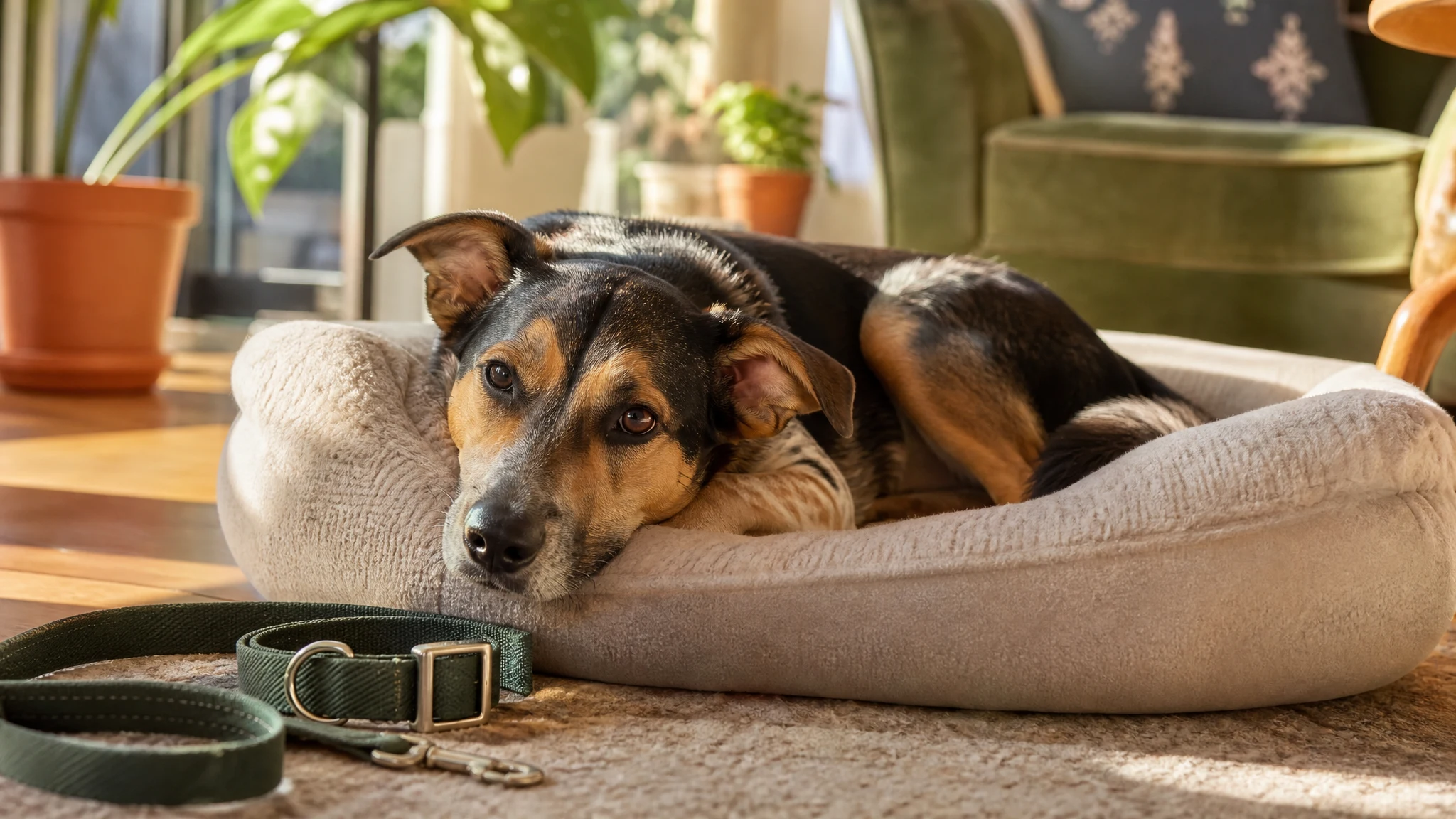
General training information. For aggression, sudden behavior changes or health concerns, see your veterinarian first.
Bringing home a rescue dog is exciting, and it can also feel like a lot. Your new dog doesn't know your house, your street or your schedule yet. Neither of you needs to have it all figured out on day one.
This plan is for training a rescue dog during the first 30 days at home. It moves in order: decompression, routine, house training, name and recall, then alone time. Every step uses rewards and patience, in line with the American Veterinary Society of Animal Behavior (AVSAB).
Many Charlotte adopters begin at Charlotte-Mecklenburg Animal Care & Control. Its main shelter is at 8315 Byrum Dr, Charlotte, NC 28217. Its satellite shelter is at 2700 Toomey Avenue, Charlotte, NC 28203. Wherever your dog came from, the plan below applies.
What You Need Before You Start
- A flat collar or well-fitted harness with an ID tag, plus a standard 4 to 6 foot leash.
- Small, soft treats your dog loves, cut into pea-sized pieces.
- A crate, exercise pen or baby gate to set up a safe resting area.
- A bed or blanket, water bowl and a few chew items.
- Enzymatic cleaner for accidents.
- A notebook or phone notes to track meals, potty trips and progress.
- Your dog's records, including rabies vaccination proof from a veterinarian.
You don't need shock, prong or choke collars. They aren't part of humane, reward-based training, and they can make a nervous rescue dog more fearful.
Before Week One: Charlotte Paperwork
Do the paperwork early so it doesn't slip.
North Carolina law (G.S. 130A-185) requires the owner of a dog over four months of age to have the dog vaccinated against rabies. Charlotte-Mecklenburg also requires proof of a current rabies vaccine to get or renew a pet license.
According to City of Charlotte Animal Care and Control, dogs 4 months and older need a license in Charlotte, Mint Hill, Pineville and unincorporated Mecklenburg County. The fee is $30 for a fertile animal. For a sterilized animal it is $10 for a 1-year license or $25 for a 3-year license. You can buy it by mail or online through PetData, Inc., or in person at the animal shelter. Check the city's Pet License page for current details.
Also book a visit with your veterinarian in the first week or two. A checkup is the best way to rule out pain or illness that can look like a behavior problem.
The 30-Day Plan, Step by Step
Week 1 (Days 1 to 7): Decompression
Step 1: Keep the first days calm and boring. Skip the dog park, the visitors and the big outings. Your dog is adjusting to new smells, sounds and people. Many rescue dogs seem a little shut down or a little wild at first, and neither tells you what they'll be like in a few weeks.
Step 2: Set up a safe space. Put a bed, water and a chew item in a quiet corner, or use a crate with the door open. Let your dog choose to go there. Never push or drag a dog into it.
Step 3: Start a simple schedule. Feed, walk and rest at about the same times each day. Predictability helps a dog who has been moved around feel safe.
Step 4: Leash up for every trip outside. Even in a fenced yard, stay with your dog at first. A new dog may bolt when startled, and they don't know your home or neighborhood yet.
Step 5: Reward calm behavior. When your dog settles, lies down or looks at you, quietly drop a treat. You're teaching that calm things pay off.
Step 6: Keep walks short and sniffy. Let your dog explore on a loose leash near home. Sniffing is tiring and calming for a dog.
Week 2 (Days 8 to 14): Routine and Basic Manners
Step 7: Build the routine. Keep meals, potty breaks and walks steady. Add two or three short training sessions a day, about three to five minutes each.
Step 8: Teach "sit" with a treat lure. Hold a treat at your dog's nose, move it slowly up and back over the head, and reward when the rear touches the floor. Add the word once your dog sits easily.
Step 9: Teach "look at me." Wait for eye contact, say "yes," and treat. This becomes your tool for focus around distractions on Charlotte sidewalks and greenways.
Step 10: Practice loose-leash walking. Stop when the leash tightens. Move again when it slackens, and reward your dog for staying beside you. Be patient. This takes many short repetitions.
Step 11: Introduce handling gently. Touch paws, ears and collar, then give a treat. This makes grooming and vet visits easier later.
If your dog growls, snaps or bites, do not punish it. Call your veterinarian, and for any aggression toward people, work with a veterinarian and a certified behavior professional. See the section near the end of this article.
Week 3 (Days 15 to 21): House Training
Start house training from day one. By week three you can tighten it up, because you've learned your dog's patterns.
Step 12: Take your dog out on a schedule. Go out first thing in the morning, after meals, after naps, after play and before bed. Many dogs need to go at those times.
Step 13: Use the same spot and a cue. Walk to one area, wait quietly, and say a cue such as "go potty" as your dog starts to go. Reward right away, while your dog is still outside.
Step 14: Supervise indoors. Keep your dog in sight, on a tether, or in a gated area. Watch for sniffing, circling or heading to the door.
Step 15: Handle accidents calmly. If you catch your dog mid-accident, interrupt with a cheerful sound and take them out. Clean with an enzymatic cleaner. Never rub a nose in it or scold afterward. Your dog will just learn to hide.
Step 16: Use a crate or pen wisely. Dogs usually avoid soiling where they sleep. Make the crate comfortable and never use it as punishment. Don't leave a dog crated longer than they can reasonably hold it.
Some rescue dogs were never house trained or have lived in kennels. Setbacks are common, and they don't mean your dog is stubborn.
Week 4 (Days 22 to 30): Name, Recall and Alone Time
Step 17: Build a strong name response. Say your dog's name once in a happy voice. When your dog looks at you, give a treat. Repeat in different rooms. Don't use the name for scolding.
Step 18: Start recall indoors. Say "come" in a bright voice, step back, and reward with a high-value treat when your dog arrives. Then practice in a hallway, then a fenced area on a long line.
Step 19: Keep the long line on outdoors. A rescue dog's recall is not reliable yet, however well it goes at home. Leash law matters here. According to City of Charlotte Animal Care and Control, the leash law applies in Charlotte and Mecklenburg County. Dogs must be on a leash or inside a fence or marked, operable invisible fence, under physical restraint whenever off your property. The city lists a $50 first-violation citation.
Step 20: Teach alone time in small steps. Many adopted dogs worry when left. Start by stepping out of the room for a few seconds, then return and reward calm behavior. Slowly add time. Give a chew or stuffed toy as you leave, and keep arrivals and departures low-key.
Step 21: Watch the barking. The Mecklenburg County animal ordinance, as published by City of Charlotte Animal Care and Control, lists excessive, continuous or untimely barking, whining or howling as a public nuisance. If your dog cries when alone, build up alone time gradually and talk to your veterinarian or a behavior professional if it continues.
Charlotte-Specific Tips for the First Month
Dog Parks: Wait, Then Check the Rules
Mecklenburg County Park and Recreation runs off-leash dog parks, including Davie Dog Park at William R. Davie District Park (4635 Pineville-Matthews Road), Frazier Park Dog Park, Shuffletown Dog Park and Clarks Creek Dog Park. The county says the parks are open daily from 7:30 a.m. to sunset. Dogs need current rabies (with tag number), DHLPP and Bordetella vaccinations, and no children under 12 are allowed. Check the county's dog park page for any other rules or fees.
You don't have to rush to a dog park. Many new rescue dogs do better meeting one calm, known dog on a leashed walk first. The park will still be there in month two.
Summer Heat
Charlotte summers are hot. In a WSOC-TV report, Charlotte Mecklenburg Animal Care and Control advised avoiding hot pavement at peak heat because it can burn paws. It also advised walking pets in the early morning or late evening, never leaving pets in parked cars, and bringing pets indoors in extreme heat. Leaving a pet in dangerous heat may lead to animal abuse charges in the county, according to that report.
Ticks and Fleas
WFAE has reported that the blacklegged tick has been found in Mecklenburg County, and that other ticks also occur in North Carolina. NC State Extension advises using a product that works on both fleas and ticks, chosen with a veterinarian, and not combining products. Ask your vet at that first visit.
Common Mistakes to Avoid
- Doing too much too soon. Crowds, visitors and busy parks can overwhelm a new dog.
- Punishing accidents or fear. Punishment can make a nervous dog hide problems or become more fearful.
- Trusting recall too early. Use a leash or long line until recall has been practiced in many places.
- Using old-style "dominance" advice. Alpha rolls, scruffing and leash corrections aren't recommended by AVSAB and can damage trust.
- Skipping the vet visit. Pain, parasites and illness can cause behavior changes.
- Long training sessions. Several short sessions work better than one long one.
What You Can Reasonably Expect
Every dog is different, and a dog's past, age and personality all matter. Many adopters notice that, over the first month, their dog seems more relaxed, starts to follow a routine and responds to simple cues at home. Some dogs may take much longer to feel settled, and that is normal.
A common rule of thumb is that dogs may need about three months to feel fully at home. Your 30 days lays the groundwork. It's not a deadline.
When to Get Help
See your veterinarian first for any medical concern, sudden change in behavior, loss of appetite, or house soiling that doesn't improve.
If your dog growls, snaps, lunges or bites people, contact a veterinarian and a certified behavior professional. Don't try to handle it alone. Mecklenburg County rules matter too. According to City of Charlotte Animal Care and Control, a dog that bites someone is quarantined for ten days, and owners of dogs determined to be dangerous face protective measures such as secure fencing, liability insurance, warning signs and muzzling off the owner's property.
Charlotte-area professionals listed with a public directory include Camille D Asmer of Canine Behavior Solutions (IAABC-CDBC, per the dogtrainerlocator.com listing) and Angie Cook of Canine Cohesion Behavior Services (CDBC, per the dogtrainerlocator.com listing). Confirm credentials and approach with any professional directly before booking.
Group Classes
Classes can be a good next step after the first month. The Humane Society of Charlotte says proof of DHPP, rabies and bordetella vaccines must be on file for all of its dog classes, and puppies can join at 16 weeks. Other facilities may differ, so ask before you enroll. For help comparing options, see our guide to dog training classes in Charlotte, costs and how to choose.
A Quick Recap
- Week 1: decompress with calm days, a safe space and short sniffy walks.
- Week 2: build routine, with sit, look at me and loose-leash basics.
- Week 3: tighten up house training with a schedule, supervision and rewards.
- Week 4: practice name, recall on a long line and gradual alone time.
- Throughout: license your dog, keep rabies current, follow leash rules and see a vet when something seems off.
Be kind to yourself and your dog. Progress isn't always a straight line, and a small win each day adds up.
Sources
- City of Charlotte, Animal Care and Control, Pet License
- City of Charlotte, Animal Care and Control, Mecklenburg County Animal Ordinance
- North Carolina General Assembly, G.S. 130A-185
- Charlotte-Mecklenburg Animal Care & Control, Adopt a Pet
- Mecklenburg County Park and Recreation, Dog Parks
- WSOC-TV, How to protect your pets during extreme heat
- WFAE, Ticks continue creeping southward in North Carolina
- NC State Extension, Time for Tick Treatments
- Humane Society of Charlotte, Dog Training
- dogtrainerlocator.com, Camille D Asmer
- dogtrainerlocator.com, Angie Cook