Puppy Training in Charlotte: Classes, Socialization and When to Start
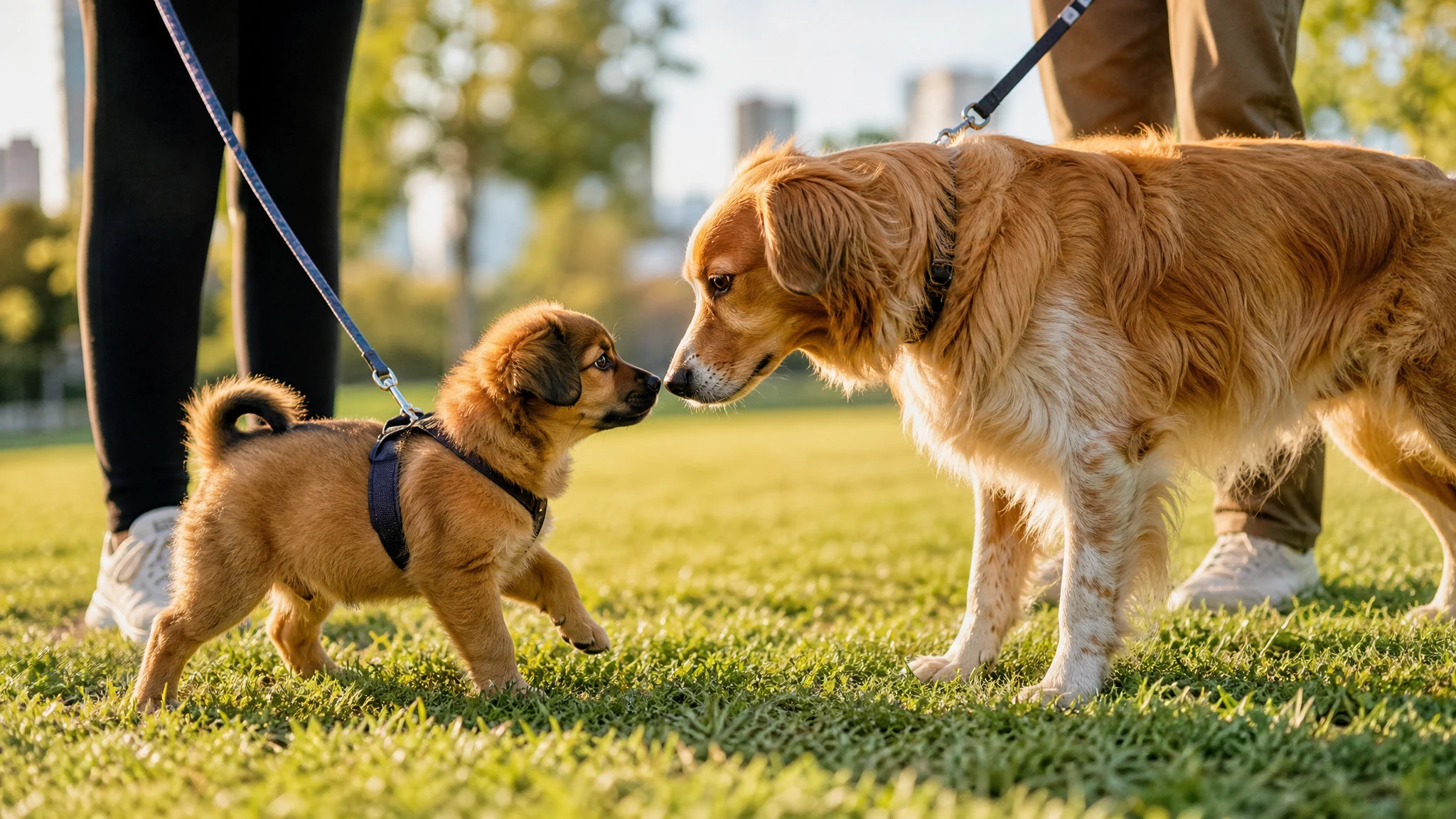
General training information. For aggression, sudden behavior changes or health concerns, see your veterinarian first.
Bringing home a puppy in Charlotte is exciting, and the questions start fast. When can we start a class? Is it safe to meet other dogs? What do we need to do before the city says we are legal?
This guide walks through puppy training in Charlotte step by step. It covers when to begin, what puppy training classes usually ask for, how to socialize your puppy around the city, and how to set up your first weeks at home. It uses gentle, reward-based methods, in line with the American Veterinary Society of Animal Behavior (AVSAB).
What You Will Need
You do not need much to get started. Gather these before day one:
- Small, soft treats. Pea-sized pieces work best so your puppy can eat quickly and keep learning. Ask your veterinarian which treats suit your puppy's stomach.
- A flat collar or a well-fitted harness and a standard leash. Choose comfort. Avoid shock, prong and choke collars, which are not part of humane training.
- A crate or a gated puppy area. This gives your puppy a safe place to rest.
- Chew toys and a few puzzle toys. They give teething mouths something appropriate to do.
- Vaccination records. Classes, licensing and dog parks all ask for them.
- Poop bags and a water bottle. You will use both on every outing.
- A notebook or phone notes. Track what your puppy has met, what went well and what felt scary.
Step 1: Understand When to Start
Many new owners hear that puppies must stay home until every vaccine is done. The AVSAB position statement on puppy socialization takes a more balanced view. It says puppy classes can begin before the vaccine series is complete, as long as sensible precautions are taken.
The reason is timing. Early weeks are a sensitive period when puppies learn what is normal and safe. Missing that window can raise the chance of fear and behavior trouble later. Waiting too long can cost your puppy valuable learning time. Skipping safety can put a young puppy at risk of illness.
So the plan is not "wait" or "go everywhere." It is "start early, but choose carefully." Before booking anything, talk with your veterinarian about your puppy's vaccine schedule and what is safe for your puppy right now. Your vet knows your puppy's health history and can tell you which settings to avoid for the moment.
Precautions that usually make sense for a puppy who is still finishing vaccines:
- Choose classes that require proof of vaccines and keep a clean, controlled space.
- Skip high-traffic spots where many unknown dogs have been, such as dog parks, until your vet says it is fine.
- Carry your puppy through areas where unknown dogs may have been, so they can watch and listen without touching the ground.
- Keep playdates to healthy, vaccinated, friendly adult dogs you know.
Step 2: Gather Your Puppy's Records
Local classes ask for paperwork, so get it in order early. The Humane Society of Charlotte says proof of DHPP, rabies and bordetella vaccines must be on file for all of its dog classes. Puppies can join at 16 weeks old, and the same vaccines apply. Records can be emailed to [email protected] or brought to the first class.
That is one facility's policy. Other Charlotte-area trainers and clubs may set different age limits and vaccine rules, so ask each one before you sign up. Some may welcome younger puppies. Others may follow the same 16-week rule.
Ask your veterinarian for a copy of your puppy's records at each visit. Keep a photo of them on your phone.
Step 3: Know the Charlotte Rules That Affect Your Puppy
Puppy training in Charlotte goes more smoothly when you know the local rules from the start.
Rabies vaccination
North Carolina General Statute 130A-185 says the owner of a dog over four months of age must have the animal vaccinated against rabies. Charlotte-Mecklenburg also requires proof of a current rabies vaccine to get or renew a pet license.
License
According to City of Charlotte Animal Care and Control, dogs aged 4 months and older need a license in Charlotte, Mint Hill, Pineville and unincorporated Mecklenburg County. The listed fees are $30 for a fertile (unsterilized) animal. For a sterilized animal, the fee is $10 for a 1-year license or $25 for a 3-year license. Licenses are sold by mail or online through PetData, Inc., the city's contractor, or in person at the animal shelter. Mark your calendar for your puppy's four-month birthday.
Leash law
The Mecklenburg County animal ordinance, as published by City of Charlotte Animal Care and Control, applies in Charlotte. Animals must be on a leash or contained within a fence or a marked, operable invisible fence. Dogs must be kept on leash and under physical restraint at all times when off the owner's property. The first-violation citation is $50. Check with Animal Care and Control for details beyond that.
Barking
The same county ordinance lists allowing an animal to bark, whine, howl, crow or cackle in an excessive, continuous or untimely fashion as a public nuisance. Puppies cry in the crate and bark for attention. Teaching calm habits early helps you and your neighbors.
Step 4: Choose a Puppy Class
Puppy training classes teach more than sit and down. A good class helps your puppy practice calm behavior around other puppies, new people and distractions, while you learn how to guide them.
Here is what to look for when comparing puppy classes in Charlotte:
- Reward-based teaching. The instructor should use treats, toys and praise. Any class that uses shock, prong or choke collars, alpha rolls, scruffing or "dominance" talk is not in line with AVSAB guidance.
- Clear vaccine requirements. Ask what is needed and from what age.
- Small, well-managed groups. Puppies should be able to take breaks, and shy puppies should not be forced.
- Supervised play with rules. Look for instructors who interrupt rough play and let puppies rest.
- Homework you can actually do. Short daily practice beats long, tiring sessions.
You can visit a class or call to ask questions before enrolling. Local options include the Humane Society of Charlotte, which offers dog training classes. Charlotte Dog Training Club also lists pet classes and obedience, with instructor Valerie Licausi stating the CPDT-KA credential on the club's instructor page. The club is at 2273 Burkette Rd, Rock Hill, SC 29730, and serves the Charlotte area.
If you prefer private help, some trainers in the Charlotte area list professional credentials. Linsey Cravens of Limitless Freedom Dogs lists CPDT-KA (CCPDT) and is an AKC Canine Good Citizen and Trick Dog evaluator. Camille D Asmer of Canine Behavior Solutions is listed with IAABC and CCPDT credentials. Credentials show a trainer has met a certain standard, but they are not a recommendation. Contact trainers directly about their methods, schedules and fees.
Step 5: Socialize Safely Around Charlotte
Socialization means helping your puppy have calm, pleasant experiences with the sights, sounds, surfaces and people of everyday life. It does not mean letting your puppy meet every dog on the street.
Build a checklist
Write down things your puppy should meet gently over the first months. Think about a variety of people (hats, umbrellas, uniforms, kids with adult supervision), sounds (traffic, doorbells, vacuums, thunder recordings at low volume), surfaces (tile, grass, gravel, metal grates) and handling (nail trims, ear checks, collar touches).
Use Charlotte's everyday places
You can find plenty of low-risk practice in a city like Charlotte without visiting a crowded spot:
- Your own street. Sit on the curb at a distance and let your puppy watch cars, bikes and joggers go by. Reward calm looks.
- Quiet sidewalks and neighborhood walks. Keep outings short, and let your puppy sniff at their own pace.
- Friends' yards. Ask friends with healthy, vaccinated, gentle dogs to host a short visit.
- Outdoor spaces where dogs are leashed. The county notes dogs must be leashed on the Irwin/Stewart Creek Greenway near Frazier Park. Ask your vet whether your puppy is ready for places where other dogs walk.
Wait on dog parks
Mecklenburg County Park and Recreation says dogs must have current rabies (with tag number), DHLPP and Bordetella vaccinations to use its off-leash areas. Parks are open daily from 7:30 a.m. to sunset, and no children under 12 are allowed. Parks named by the county include Davie Dog Park at William R. Davie District Park (4635 Pineville-Matthews Road), Frazier Park Dog Park, Shuffletown Dog Park and Clarks Creek Dog Park. Check the county page for current details.
A young puppy who has not finished vaccines is not ready for these spaces. Even after, many puppies find them overwhelming. Visit first without your puppy, or watch from outside the fence, before you decide.
Watch for signs of stress
Yawning, lip licking, tucked tail, hiding behind you or refusing treats can mean your puppy is overwhelmed. Add distance, give them a break and try again later. Never push a scared puppy toward the thing they fear.
Step 6: Plan the First Weeks at Home
The first weeks set the tone. Keep it simple and predictable.
- Set up a routine. Offer meals, potty trips, play and naps at regular times. Puppies do better when the day has a rhythm.
- Take frequent potty breaks. Go out after waking, after eating, after play and before bed. Reward your puppy right after they finish outside.
- Teach the crate as a calm place. Feed meals there, toss in treats and keep sessions short at first. Never use the crate as punishment.
- Practice name and eye contact. Say your puppy's name, and reward when they look at you. This one habit supports almost everything else.
- Teach sit and down with a treat lure. Hold a treat at your puppy's nose, move it slowly, and mark the moment their body gets there with a cheerful "yes" before the treat.
- Handle gently every day. Touch paws, ears and mouth briefly, and pair each touch with a treat.
- Give chew options. Redirect nipping to a toy instead of scolding. Trade for a treat if your puppy picks up something off limits.
- Keep sessions short. Two or three minutes at a time, a few times a day, is plenty for a young puppy.
- Schedule rest. Puppies need lots of sleep. A tired puppy is often a nippy, cranky puppy.
Charlotte Hazards to Keep in Mind
Hot pavement. Charlotte Mecklenburg Animal Care and Control, quoted by WSOC-TV in June 2025, advises avoiding hot pavement or asphalt at peak heat because it can burn paws. The agency also suggests walking pets in cooler hours, early morning or late evening, never leaving pets in parked cars, and bringing pets indoors in extreme heat. Puppies have small, tender paws, so test the ground with your hand before you head out.
Ticks. WFAE reported in 2020 that the blacklegged tick has been found in Mecklenburg County, and that Lone Star, brown dog and American dog ticks also occur in North Carolina. NC State Extension advises using a product that works on both fleas and ticks, chosen with a veterinarian, and not combining products. Ask your vet what is right for a puppy of your puppy's age and size, and check your puppy after outdoor time.
Common Mistakes to Avoid
- Waiting until every vaccine is done to do anything. You can still do safe, controlled socialization and enroll in a suitable class with your vet's guidance.
- Going straight to a dog park. It is a lot for a young puppy, and local parks have vaccine requirements.
- Flooding a nervous puppy. More exposure is not better if your puppy is frightened. Go slowly.
- Using punishment. Yelling, leash pops and physical corrections can make puppies fearful. Reward what you want to see.
- Letting rough play go unchecked. Step in and give a break when play gets too intense.
- Forgetting the paperwork. Rabies proof, the four-month license and class records are easy to miss in the rush of new puppy life.
- Expecting too much too soon. Puppies are babies. Mistakes are normal.
What Results to Expect
Every puppy learns at a different pace, and results depend on breed, age, personality, past experiences and how consistently you practice. With patient, reward-based training and regular, gentle socialization, many puppies become calmer, more confident and easier to live with over time. You may see your puppy get better at potty habits, responding to their name, settling in the crate and handling new places.
Setbacks are common, especially during adolescence. Nothing here can promise a particular outcome, but steady practice generally helps.
When to Call a Professional
If your puppy seems sick, stops eating, has vomiting or diarrhea, or has a sudden change in behavior, see a veterinarian right away. Pain and illness can look like behavior problems.
If your puppy or dog growls, snaps or bites people, talk with your veterinarian and a certified behavior professional. In Charlotte, the listings include Camille D Asmer of Canine Behavior Solutions (IAABC-CDBC, 6600 Brookmeade Dr., Charlotte, NC 28226) and Angie Cook of Canine Cohesion Behavior Services (listed as CDBC, 1015 Hills Oak Lane, Charlotte, NC 28269). Check each person's credentials and methods yourself before you book.
The county's dangerous dog process can bring protective measures such as secure fencing, liability insurance, warning signs and muzzling off the owner's property. A dog that bites someone is quarantined for ten days, according to City of Charlotte Animal Care and Control. Early help with fear and aggression is far easier than waiting.
Where to Find Help in Charlotte
City of Charlotte Animal Care and Control runs the main shelter at 8315 Byrum Dr, Charlotte, NC 28217, and a satellite shelter at 2700 Toomey Avenue, Charlotte, NC 28203. The phone number listed for the agency is 704.336.7600. Hours change, so check the agency's website before you visit. Staff can answer questions about licenses and local rules.
Sources
- City of Charlotte, Animal Care and Control, Pet License
- City of Charlotte, Animal Care and Control, Mecklenburg County Animal Ordinance
- North Carolina General Assembly, G.S. 130A-185
- Humane Society of Charlotte, Dog Training
- Mecklenburg County Park and Recreation, Dog Parks
- City of Charlotte, Animal Care and Control, Adopt a Pet
- WSOC-TV, How to protect your pets during extreme heat
- WFAE, Ticks continue creeping southward in North Carolina
- NC State Extension Entomology, Time for Tick Treatments
- Charlotte Dog Training Club, Instructors
- Limitless Freedom Dogs
- Canine Behavior Solutions listing
- Canine Cohesion Behavior Services listing